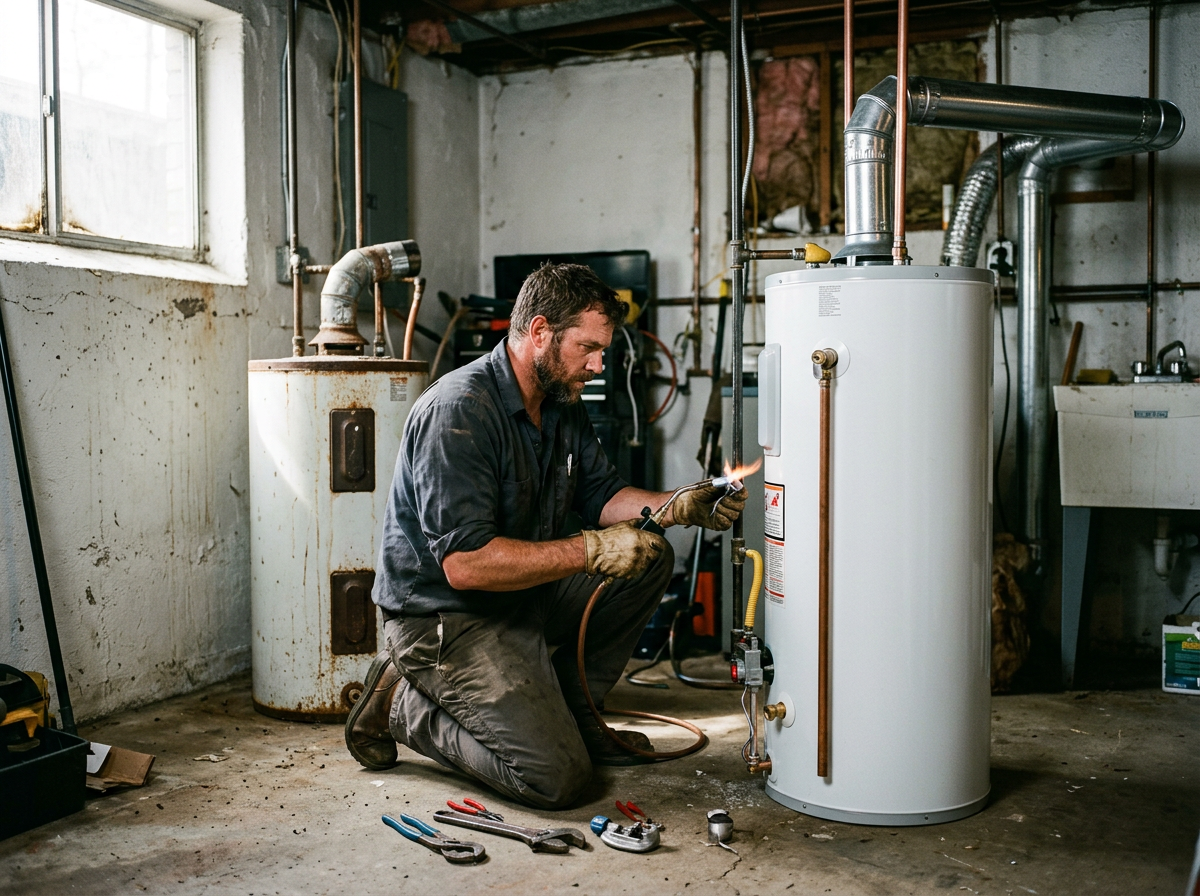
Proper sizing starts with first-hour rating calculations that factor in household peak demand and the thinner air at 5,280 ft, which reduces combustion efficiency on gas appliances. A unit that looks adequate on paper can fall short once elevation derates the burner output, so we measure actual draw and recommend tanks or tankless models with enough capacity after that adjustment. Hard Front Range water adds sediment that settles at the bottom, lowers efficiency, and produces rumbling sounds long before the tank leaks.
The 2026 ultra-low NOx rule requires sealed combustion with power venting on new installations, which means running a dedicated vent pipe, adding an electrical circuit for the fan, and often enlarging the gas line. Older atmospheric units that once vented up existing chimneys in Capitol Hill or Baker bungalows no longer qualify for sale or install. Newer homes in Parker, Castle Rock, or Thornton usually have chase space already, keeping the retrofit simpler and less expensive.
Thermal expansion tanks are required whenever a pressure-reducing valve or backflow preventer creates a closed system, yet Denver interpretations have left many homeowners unsure whether their setup needs one. We check the incoming pressure and valve arrangement before quoting so the new water heater does not trigger relief-valve discharge. Permits and inspections are pulled for every job; the inspector verifies venting slope, combustion air, and expansion control before the system is signed off.
Sediment buildup, failing gas valves, and corroded dip tubes are the most common failure points here. When repair costs approach half the price of a compliant new unit, replacement is usually the practical choice. We evaluate the remaining tank life, venting compatibility, and code gaps before recommending repair versus full replacement.
Technician insight
In Denver, the thing that catches most people out with Gas Water Heater Replacement is the tight utility closets in pre-war bungalows in Capitol Hill and Baker, where routing the new power vent and adding an electrical circuit takes extra planning compared to newer homes in Parker or Thornton.
Baker Bungalow Retrofit
An older natural draft unit in a Baker bungalow was failing from hard-water sediment. The existing chimney could not support sealed combustion venting required by the 2026 rule. We installed a power-vent model, added the needed electrical circuit and expansion tank, and completed the permitted inspection.
Gas Water Heater Replacement Services We Offer
✓Sealed Combustion Conversion
Replaces atmospheric units with power-vent sealed combustion models required under current Denver sale and installation rules.
✓Expansion Tank Installation
Adds the correct thermal expansion tank when a closed system is confirmed by pressure-reducing valve or backflow preventer presence.
✓Power Vent Electrical Circuit Addition
Runs a new dedicated circuit and outlet to power the exhaust fan and controls on sealed combustion water heaters.
✓Gas Line Sizing Upgrade
Evaluates and upsizes the gas supply line to maintain proper pressure and volume for the new higher-BTU sealed unit.
✓Sediment Flush and Assessment
Removes accumulated scale from the existing tank, then evaluates whether repair or replacement is the better long-term option.
Gas Water Heater Replacement Cost in Denver, CO
| Service | Typical Range | What Affects It |
|---|---|---|
| Basic Sealed Combustion Replacement | $6,800–$9,500 | Newer homes with existing chase space; price rises with tank size and gas line work |
| Complex Retrofit in Pre-War Homes | $9,200–$13,000 | Tight closets and chimney constraints in Capitol Hill, Baker, or Highlands |
| Expansion Tank Add-On | $350–$650 | Required on closed systems; varies by access and tank size |
| Electrical Circuit Addition | $450–$850 | Dedicated circuit for power vent fan and controls |
Ranges are typical for Denver, CO and confirmed with an exact written quote before any work starts.
How it works
- 1
Site Assessment
Measure peak demand, check elevation derate, inspect existing venting, and confirm whether the system is closed for expansion tank needs.
- 2
Permit and Planning
Pull required permits, select a compliant ultra-low NOx model, and map new vent routing plus electrical and gas line changes.
- 3
Removal and Install
Safely remove the old unit, install the new sealed combustion heater, run power vent piping, add the electrical circuit, and set the expansion tank.
- 4
Testing and Handover
Pressure test, verify combustion air, run the unit through cycles, schedule inspection, and explain maintenance for hard water conditions.
Pricing
Replacements now run higher because HB 23-1161 requires sealed combustion, power venting, and added electrical work on every new installation.