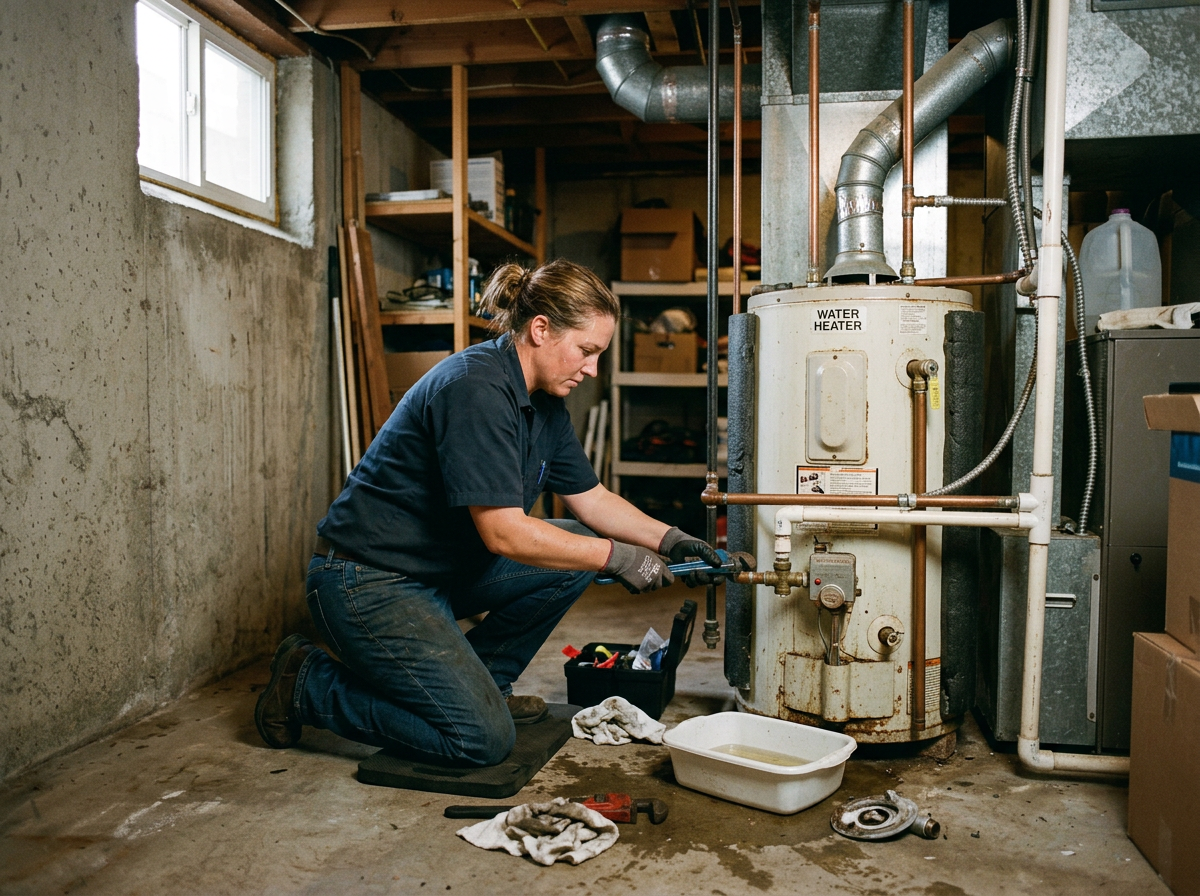
Hard Front Range water leaves mineral sediment that builds up fast in tank bottoms, creating rumbling and popping sounds while shortening life through overheating at the bottom. At 5,280 feet elevation, combustion air and draft change noticeably on atmospheric units, so technicians must verify proper venting before any repair. Common failures include leaking dip tubes, corroded anode rods, and stuck thermostats that no longer hold temperature. Homeowners often ask whether a repair makes sense; tanks older than eight years with multiple leaks or heavy sediment rarely justify the work when a sealed-combustion replacement is already required by the 2026 law on new installations.
Venting and combustion air requirements tightened under Colorado HB 23-1161, which took effect January 2026. Any repair involving a gas water heater now needs confirmation that the unit meets the 10 ng/J NOx limit if the appliance is being replaced, though working equipment does not have to be swapped out. Power-vented or direct-vent models add an electrical circuit and longer vent runs that older Capitol Hill and Baker bungalows rarely have space for. Technicians check for adequate combustion air openings and existing chimney condition before attempting a fix, because blocked or undersized vents cause carbon monoxide risks at altitude.
Closed systems created by Denver’s backflow preventers require thermal expansion tanks on many repairs. Pressure-reducing valves common in Washington Park and Highlands homes trap expanded water, raising pressure and stressing the tank. Permits and inspections are triggered whenever venting or gas piping is altered, so crews coordinate with the city to avoid later compliance issues. Gas line sizing must account for elevation derating, and electrical requirements for new blower motors or controls often mean adding a dedicated circuit during the visit.
First-hour rating and tank sizing matter when deciding between repair and full replacement. A 50-gallon unit in a family home may need a higher FHR after the 2026 changes because power-vent models recover differently. Gas control valves and electric elements are usually worth fixing if the tank itself remains sound; once the glass lining fails or multiple leaks appear, replacement becomes the practical choice. Technicians always quote both options on site so homeowners can weigh the added cost of sealed-combustion venting against continued repairs.
Technician insight
In Denver the thing that catches most people out with Emergency Water Heater Repair is discovering that pre-war bungalows in Capitol Hill and Baker have chimney vents too tight for the new sealed-combustion units the 2026 law pushes, so a simple valve swap suddenly becomes a venting retrofit discussion.
Baker Bungalow No Hot Water
The homeowner reported sudden loss of hot water in a 1920s Baker home. We found a failed gas control valve and marginal draft in the existing chimney at altitude. The valve was replaced, combustion air openings were verified, and an expansion tank was added to resolve the closed system created by the backflow preventer. Hot water returned the same afternoon without triggering a full replacement.
Emergency Water Heater Repair Services We Offer
✓Gas Control Valve Repair
Replaces or rebuilds faulty gas valves that cause temperature swings or failure to ignite, restoring safe operation without full unit replacement.
✓Electric Element Replacement
Swaps burned-out upper or lower heating elements in electric tanks, often restoring hot water within the same visit.
✓Thermostat and Limit Switch Service
Diagnoses and replaces inaccurate thermostats or tripped high-limit switches that prevent the unit from maintaining temperature.
✓Sediment Flush and Anode Inspection
Removes accumulated mineral buildup and checks anode rod condition to quiet noisy tanks and extend remaining life.
✓Expansion Tank Installation
Adds required thermal expansion tanks on closed systems created by backflow preventers, protecting against pressure spikes.
✓Venting and Combustion Air Assessment
Evaluates existing chimney or vent runs for code compliance and drafts at Denver’s elevation before any gas repair proceeds.
Emergency Water Heater Repair Cost in Denver, CO
| Service | Typical Range | What Affects It |
|---|---|---|
| Gas valve or thermostat repair | $350–$650 | Higher when venting or electrical circuit work is required |
| Electric element replacement | $200–$450 | Depends on access and whether both elements need service |
| Expansion tank addition | $300–$550 | Includes permit coordination in closed systems |
| Full diagnostic visit with minor fix | $150–$300 | Applied toward repair if work proceeds |
Ranges are typical for Denver, CO and confirmed with an exact written quote before any work starts.
How it works
- 1
Initial Phone Assessment
Dispatch gathers symptoms, age of unit, and fuel type to bring the right parts on the first trip.
- 2
On-Site Safety And Diagnostic Check
Technician tests for gas leaks, verifies venting integrity, and measures water pressure and temperature.
- 3
Component Repair Or Replacement
Fixes the failed part—valve, element, or thermostat—while confirming the tank itself remains viable.
- 4
System Test And Code Review
Restores hot water, checks combustion, installs expansion tank if needed, and notes any 2026 venting requirements.
- 5
Final Walkthrough
Explains what was repaired, shows the homeowner the work, and provides options for future replacement planning.
Pricing
Emergency repair pricing has risen with the 2026 shift to power-vented equipment, adding electrical and venting work even on service calls.